Commercial EICR & Fixed Wire Testing in Shropshire
Electrical Installation Condition Reports for offices, retail, warehouses and hospitality across Telford, Shrewsbury and Shropshire. NAPIT registered (full scope), NICEIC Domestic Installer registered testing with reports accepted by insurers, landlords and auditors.
What is a commercial EICR?
An Electrical Installation Condition Report (EICR) — sometimes called fixed wire testing, an electrical safety certificate, or just electrical testing — is the formal inspection your commercial premises needs to stay safe, insured, and legally compliant. We carry out commercial EICRs for offices, retail units, warehouses, hospitality venues, and light industrial premises across Telford, Shrewsbury and the wider county, with reports accepted by insurers, landlords and auditors.
Why your business needs one
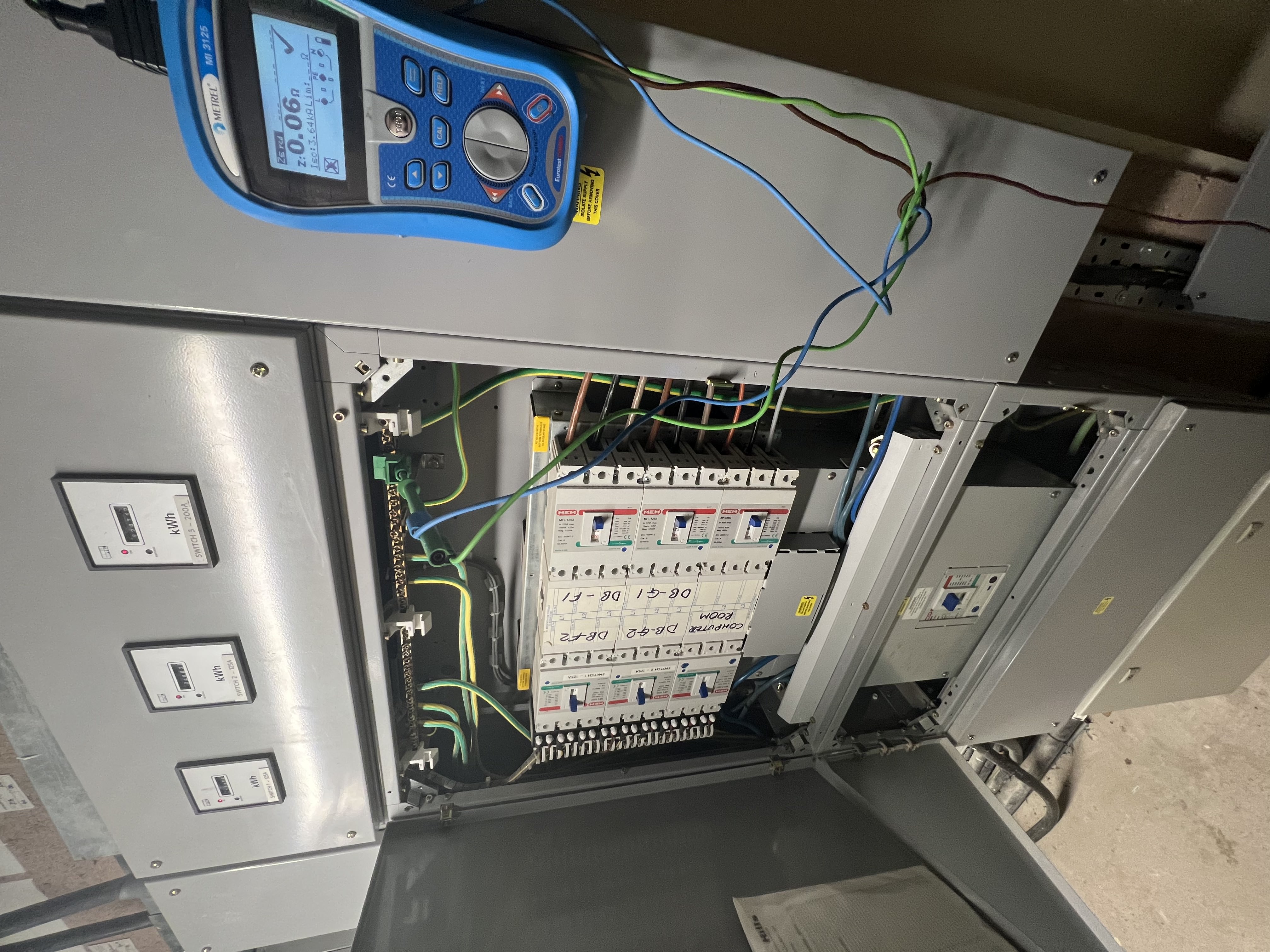
Under the Electricity at Work Regulations 1989, employers have a legal duty to maintain electrical systems in a safe condition. A commercial EICR is the standard way to demonstrate that duty has been met. Most business insurance policies also expect a current EICR on file, and many landlords make it a condition of a commercial lease. If you employ staff, welcome the public, or answer to an insurer, a commercial EICR isn't optional in practice — even if no single law names the certificate directly.
How often does a commercial property need testing?
Recommended EICR intervals vary by installation type: domestic properties are typically tested every 10 years, or every 5 years (or at change of tenancy) for rented properties. Commercial premises are typically tested every 5 years, industrial installations every 3 years, and special locations — such as swimming pools or other high-risk environments — may need testing annually. These are guideline maximums, not fixed rules: the actual interval is a judgement made by the inspecting electrician based on the age, condition and usage of the specific installation, and will be confirmed on your report.
What's inspected
- Consumer units, distribution boards and protective devices
- Fixed wiring, containment and cable routes
- Sockets, switches, and fixed lighting circuits
- Earthing and bonding arrangements
- RCD and RCBO protection
- Three-phase systems, where present
Testing is carried out on a sample basis appropriate to the size and complexity of the installation, in line with BS 7671.
Understanding your report
Every observation on an EICR is coded by severity:
- C1 — Danger present: Immediate risk. The report cannot be marked satisfactory until this is resolved.
- C2 — Potentially dangerous: Requires action, but not an immediate emergency.
- C3 — Improvement recommended: Not a legal requirement to fix, but good practice.
- FI — Further investigation required: Something needs a closer look before it can be coded.
We explain every code on your report in plain English before you sign off — no jargon, no guessing what it means for your business.
Typical pricing (guide only)
- Small retail unit / office (up to 10 circuits): typically £180 – £350
- Medium commercial unit (10–25 circuits): typically £350 – £650
- Larger premises / warehouse / multi-circuit: typically £650 – £1,200+
- Three-phase / industrial installations: quoted after survey
Exact pricing depends on the number of circuits, accessibility, and whether out-of-hours testing is needed to avoid disrupting your business. We'll always give you a written quote before booking — no surprises on the invoice.
What happens if something fails?
C1 and C2 observations need remedial work before the installation can be marked satisfactory. We carry out commercial remedial work ourselves, so you're not left chasing a second contractor — we close out the observations, re-test, and issue an updated certificate you can hand straight to your insurer or landlord.
Need related commercial electrical work?
We can complete remedials alongside broader commercial electrical services, or combine testing with a domestic-style EICR certificate where you also have rental or mixed-use space.
Commercial EICR FAQs
Yes. “Fixed wire testing” is an older, still widely-used term for the same inspection now formally called an Electrical Installation Condition Report (EICR). If you book either, you'll get the same test.
There's no single law naming the certificate directly, but your public liability insurance, employer's liability insurance, and most commercial leases will expect a current EICR. In practice, most businesses that employ staff or welcome the public need one.
It depends on the size of the premises and number of circuits. A small office might take 2–4 hours; larger sites can take a full day or more. We can often work around your trading hours or schedule out-of-hours testing to avoid disruption.
Often, yes — we can test circuit by circuit or section by section to minimise disruption, or work evenings/weekends for premises that can't have power interrupted during trading hours.
Yes. All our commercial EICRs are carried out by NAPIT registered (full scope), NICEIC Domestic Installer registered engineers and issued in the standard format accepted by insurers, landlords and letting agents.
Book commercial EICR testing in Shropshire
Get a written quote, a testing slot that works around your business, and an insurer-accepted report from NAPIT registered (full scope), NICEIC Domestic Installer registered engineers.